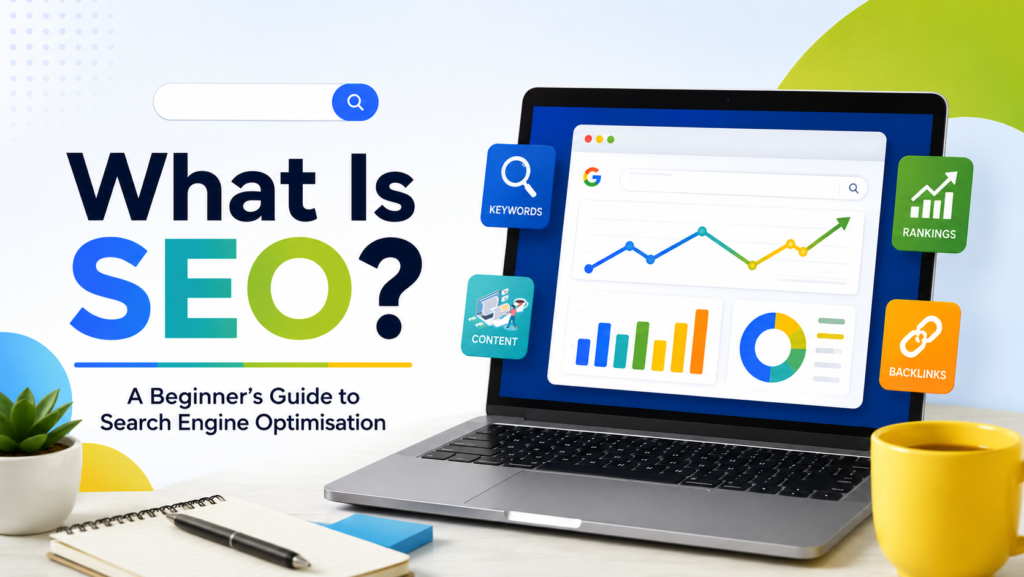
Understanding what SEO is and why it matters is the first step toward building a website that generates leads while you sleep. SEO (Search Engine Optimisation) is one of the most powerful long-term investments any small business can make online. And yet it remains one of the most misunderstood, most oversold, and most inconsistently explained topics in digital marketing.
Here's a genuinely comprehensive, jargon-free breakdown of what SEO is, how it works, what you actually need to focus on, and what a realistic timeline looks like for small businesses starting from scratch.
In This Guide
68%
of all online experiences begin with a search engine
53%
of all website traffic comes from organic search
0.63%
of Google users click past the first page of results
£1.50–£2.50
Average CPC for UK SMBs across most industries in 2026
£500/mo
Minimum ad spend to generate meaningful optimisation data
+15–30%
Higher CPCs for London campaigns vs UK average
Swipe to see more →
What Is SEO in Plain English?
SEO — Search Engine Optimisation — is the process of improving your website and online presence so that search engines like Google confidently show your pages to people searching for what you offer, without you paying for every click.
When someone types “best accountant near me” or “how to start a limited company,” Google runs through hundreds of billions of indexed pages in under a second and decides which ten results to show first. Search engine optimisation is every decision you make — about your content, your website structure, your speed, your reputation — that influences whether Google puts you in position one or position forty-seven.
SEO is not about tricking Google. It's about being genuinely more helpful, relevant, and trustworthy than every other result on the page.
How Google Actually Works
Before you can optimise for Google, you need to understand what Google is actually doing. It operates in three distinct stages — and your SEO work needs to support all three.
Crawling
Google sends automated programmes called "crawlers" or "spiders" to discover web pages by following links. If your page has no links pointing to it and isn't in your sitemap, crawlers may never find it.
Indexing
Once a page is crawled, Google decides whether to add it to its index — the giant database of pages it can serve in search results. Pages can be crawled but not indexed if they're blocked by a robots.txt file, have a noindex tag, have thin or duplicate content, or are on a domain Google doesn't trust.
Ranking
When someone searches, Google pulls relevant pages from its index and ranks them in order using hundreds of signals. Ranking is where most SEO effort is directed — but crawlability and indexability have to come first, or the ranking work is pointless.
Crawling
Google sends automated programmes called "crawlers" or "spiders" to discover web pages by following links. If your page has no links pointing to it and isn't in your sitemap, crawlers may never find it.
Indexing
Google decides whether to add the crawled page to its index. Pages can be crawled but not indexed if they're blocked by robots.txt, have a noindex tag, thin content, or are on a domain Google doesn't trust.
Ranking
Google pulls relevant pages from its index and ranks them using hundreds of signals. Ranking is where most SEO effort is directed — but crawlability and indexability must come first, or the ranking work is pointless.
Swipe to see more →
A page Google can't find will never rank. A page Google won't index doesn't exist to it. Crawl and index first — then rank.
What Google Uses to Rank Pages
Google uses over 200 ranking signals. Most of them fall into three broad categories: relevance (does this page answer the query?), authority (is this website trusted?), and experience (is this page fast, safe, and genuinely useful?).
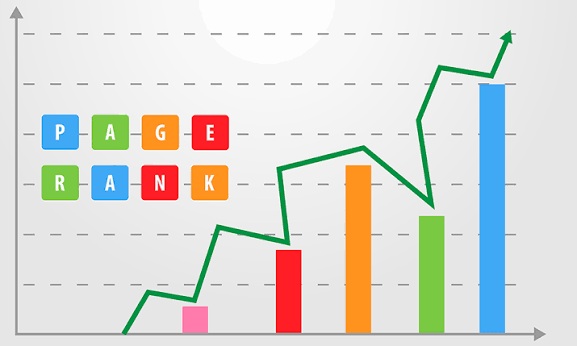
The signals that carry the most weight in 2026
- Content relevance — does the page comprehensively cover the topic the searcher is looking for?
- Backlinks — how many quality, relevant websites link to this page as a trusted source?
- E-E-A-T — does the content demonstrate Experience, Expertise, Authoritativeness, and Trustworthiness?
- Page experience — Core Web Vitals, mobile usability, HTTPS, and absence of intrusive interstitials
- User engagement — do visitors stay and read, or immediately return to Google (a "pogo-stick" signal)?
- Search intent match — is the page format right for what the searcher actually wants (a guide, a product, a list)?
- Freshness — for time-sensitive topics, recently updated content ranks above stale content
- Entity authority — is the brand or author recognised across the web as an authority on this subject?
Google's only goal is to show the best possible result. Every ranking signal is a proxy for that single question.
Keyword Research: The Foundation of Every SEO Decision
Keyword research is the process of identifying what your target customers are actually typing into Google — and then building your content strategy around those terms. It’s not about guessing. It’s about using data to find the exact language your audience uses when they’re looking for what you offer.
Three dimensions every keyword decision involves:
- Search volume: How many people search this term per month? Higher volume means more potential traffic but usually more competition
- Keyword difficulty: How hard is it to rank for this term, based on the authority of pages currently ranking?
- Search intent: Is the searcher looking to learn something (informational), compare options (consideration), or buy something (transactional)?
The four types of search intent:
- Informational: "What is SEO" / "How does email marketing work" — people want to learn
- Navigational: "KashTag Media login" / "Google Ads dashboard" — people want a specific site
- Commercial investigation: "Best SEO agency for startups" / "Shopify vs WordPress" — people are comparing options before deciding
- Transactional: "Hire SEO agency" / "Buy Google Ads management" — people are ready to act
Why intent matching matters more than keyword matching
Matching your page format and content to the right intent is as important as targeting the right keyword. A blog post trying to rank for a transactional query will lose to a product or service page every time — because that’s what Google’s algorithm knows the searcher actually wants.
The right keyword at the wrong intent is still the wrong keyword. Match what you publish to what the searcher actually wants to find.
Pillar 1- On-Page SEO: Helping Google Understand Your Content
On-page SEO is everything you do within your actual web pages to help Google understand what they’re about and match them to relevant searches. It’s the most direct, controllable lever in your entire SEO toolkit.
The on-page elements that matter most:
- Title tag: The blue link text that appears in search results; should include your primary keyword within the first 60 characters
- Meta description: The grey text beneath the title; doesn't directly affect ranking but significantly influences whether someone clicks
- H1 heading: One per page, clearly stating the topic; Google uses it as the primary content signal for the page
- H2 and H3 subheadings: Structure your content logically; include secondary keywords naturally
- URL slug: Short, descriptive, hyphen-separated; include the primary keyword
- Internal links: Links to other relevant pages on your own site; distributes authority and helps Google understand your site structure
- Image alt text: Describes images for accessibility and gives Google additional context about the page content
- Keyword usage: Appears naturally in the first 100 words, in at least one H2, and throughout the body — never forced or stuffed
On-page SEO doesn't make Google like you — it makes Google understand you. Understanding is the prerequisite for ranking.
Pillar 2- Technical SEO: Making Sure Google Can Access Your Site
Technical SEO is the foundation everything else is built on. You can have exceptional content and strong backlinks — but if Google can’t crawl your pages, can’t index them efficiently, or your site loads too slowly on mobile, those other investments produce a fraction of their potential return.
Technical SEO essentials for small businesses:

- Page speed: Aim for a Largest Contentful Paint (LCP) under 2.5 seconds on mobile; slow pages rank lower and convert worse
- Mobile-first design: Google indexes the mobile version of your site first; over 60% of searches happen on mobile devices
- HTTPS/SSL: Google treats unsecured (HTTP) sites as a ranking negative and Chrome flags them as "Not Secure" to users
- Core Web Vitals: LCP (load speed), INP (interactivity), and CLS (visual stability) are Google's official page experience metrics
- XML sitemap: A structured list of your pages submitted to Google Search Console to guide crawling
- Robots.txt: Controls which pages crawlers can and cannot access; misconfigured robots.txt is one of the most common causes of indexation problems
- Structured data (schema markup): JSON-LD code that tells Google what type of content a page contains; enables rich results like FAQs, star ratings, and how-to steps in search
- No duplicate content: Duplicate pages confuse Google about which version to rank; use canonical tags to resolve
Technical SEO is invisible when it's working perfectly and catastrophic when it isn't. Fix the foundations before building anything on top of them.
Pillar 3- Off-Page SEO: Building Authority Beyond Your Own Website
Off-page SEO is about building your website’s reputation across the internet — primarily through backlinks. A backlink is a link from another website to yours. Google treats quality backlinks as third-party endorsements: the more authoritative the site linking to you, the stronger the trust signal it passes.
What makes a backlink genuinely valuable:
- It comes from a website with genuine domain authority — news outlets, industry publications, established businesses
- The linking page is topically relevant to the content being linked to
- The anchor text is descriptive rather than generic ("digital marketing guide" beats "click here")
- It's placed editorially — earned because the content deserved it, not bought or exchanged
- The linking site itself is actively crawled and trusted by Google
Off-page signals beyond backlinks:
- Brand mentions: Google tracks unlinked brand mentions as a signal of growing authority
- Reviews: Google Business Profile and third-party review sites contribute to local authority signals
- Social signals: Not a direct ranking factor, but content shared widely tends to attract backlinks organically
- Digital PR: Earning coverage in online publications is one of the most efficient ways to build high-authority backlinks at scale
One great backlink from a trusted, relevant source is worth more than a hundred links from directories nobody reads.
Pillar 4- Content: The Surface Area of Your Entire SEO Strategy
Google can only rank pages that exist. Content creation is what gives your SEO strategy surface area — every high-quality page you publish is a new opportunity to be found for a relevant search. But volume without quality is counterproductive: thin content that doesn’t satisfy search intent dilutes your domain authority rather than building it.
Content types that drive SEO results in 2026:
- Definitive guides : Comprehensive, long-form pages that become the go-to reference for a topic
- Service pages:Clear, keyword-rich descriptions of what you do and who you help
- Comparison content: "X vs Y" format; heavily cited by AI tools and effective for commercial-intent rankings
- Question-based posts: "what is X," "how does Y work," "why does Z matter" — maps directly to how people actually search
- Case studies: Real results with specific numbers; builds E-E-A-T through demonstrable experience
- Location pages: For businesses serving specific areas, dedicated location pages capture local search intent

Content is how you earn the right to rank. Publish less, but make what you publish the best page on the internet for that topic.
E-E-A-T: Why Google Cares Who Wrote the Content
E-E-A-T stands for Experience, Expertise, Authoritativeness, and Trustworthiness. It’s not a direct ranking algorithm — it’s a framework Google’s human quality raters use to assess search results, and it strongly influences what kinds of content Google’s algorithm rewards over time.

What each E-E-A-T signal means in practice:
- Experience: Has the author actually done what they're writing about? First-person accounts, real case studies, and named results all signal genuine experience
- Expertise: Does the content demonstrate deep knowledge of the subject, not just surface-level familiarity?
- Authoritativeness : is the brand or author recognised as an authority on this topic across the web?
- Trustworthiness : Is the site secure, transparent about who's behind it, and honest in how it presents information?
For small businesses, the most practical E-E-A-T improvements are: adding a named author with credentials to every blog post, including an About page that clearly describes the team’s background, embedding real client results with specific numbers into content, and earning mentions and links from reputable third-party sources.
E-E-A-T rewards the same thing your customers reward — proof that you know what you're talking about, not just that you've said a lot of words about it.
White-Hat vs Black-Hat SEO: Why Shortcuts Backfire
Every SEO tactic sits somewhere on a spectrum from fully Google-approved (“white-hat”) to explicitly against Google’s guidelines (“black-hat”). Small businesses are regularly sold black-hat tactics by agencies who promise fast results — and then leave when the Google penalty arrives.
White-hat SEO (safe, sustainable):
- Publishing high-quality, original content that genuinely helps users
- Earning backlinks through great content and digital PR
- Optimising page speed and technical health
- Building a Google Business Profile and collecting genuine reviews
Black-hat SEO (risky, often penalised):
- Buying backlinks from link farms or paid directory networks
- Keyword stuffing — forcing keywords into content at unnatural density
- Cloaking — showing different content to Google than to users
- Private Blog Networks (PBNs) — networks of sites built solely to pass links
- Spinning or AI-generating thin content at scale with no editorial value
Black-hat SEO is borrowing against your domain's future. The loan always gets called in — usually at the worst possible moment.
Realistic SEO Timelines for Small Businesses
One of the most common ways agencies lose client trust is by overpromising on speed. Here’s an honest, experience-based timeline for what SEO actually looks like month by month for a small business starting from scratch.
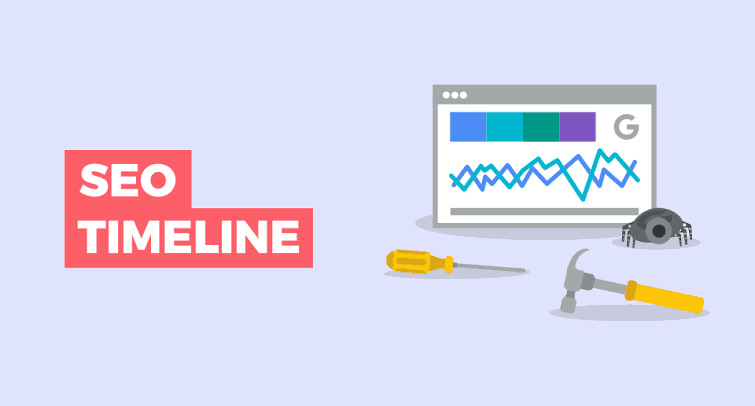
| Timeframe | What to expect | Primary focus |
|---|---|---|
| Month 1–2 | Technical audit, fixing crawl issues, keyword research, on-page optimisation of existing pages | Foundation |
| Month 2–3 | Pages begin appearing in positions 20–50 for target keywords; impressions rising in Search Console | Content + indexation |
| Month 3–5 | First meaningful rankings in positions 10–20; early organic clicks; quick-win keywords entering page one | Rankings + backlinks |
| Month 6–9 | Consistent page-one rankings for lower-competition terms; organic traffic becoming a reliable lead source | Authority + scale |
| Month 9–12+ | Competitive terms moving into top 5; compounding organic traffic; reducing PPC dependency | Compounding growth |
Month 1–2
Month 2–3
Month 3–5
Month 6–9
Month 9–12+
Swipe to see more →
SEO is a delayed investment with compounding returns. The businesses winning organic traffic today started 6 to 12 months ago.
SEO vs PPC: Which Should You Prioritise?
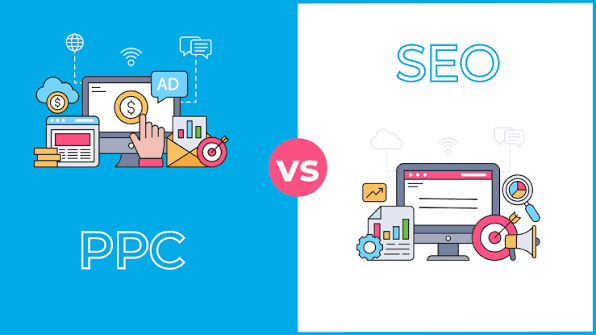
SEO and PPC (Pay-Per-Click advertising like Google Ads) are complementary, not competing, strategies. SEO builds compounding organic traffic over time — no cost per click, but takes months to build. PPC delivers immediate traffic but stops the moment you stop paying.
A simple framework for prioritising:
- Need leads this week: Start with PPC while SEO builds in the background
- Have 3 to 6 months to invest : Prioritise SEO for sustainable, cost-free traffic long term
- Scaling a proven business : Run both; SEO reduces PPC dependency and improves Quality Scores
- Early-stage startup with limited budget: PPC validates demand faster; commit to SEO once the offer is proven
KashTag Note
KashTag Media is a Google Partner and Meta Business Partner agency offering SEO services, PPC management, and local SEO for small businesses and startups. Transparent pricing. No long-term contracts.
Final Word: SEO Is a Long Game Worth Playing
The businesses that dominate search results today started investing in SEO months or years ago. The best time to start was six months ago. The second best time is now.
The right approach is not chasing shortcuts or buying cheap links from overseas agencies. It’s consistent, quality-first work across all four pillars — on-page, technical, off-page, and content — that builds compounding returns over time rather than disappearing at the next algorithm update.
KashTag Media helps small businesses build exactly that — an SEO presence that grows steadily, generates inbound leads, and gets less expensive per result with every passing month.
Have a Project in mind?
Book a free 30-minute consultation with KashTag Media — no pitch deck, no pressure, just an honest conversation.
Let us address your questions today!
Frequently Asked Questions
SEO (Search Engine Optimisation) is the process of improving a website so it ranks higher in search engine results pages like Google, without paying for ads. It involves making your content more relevant, your website more technically sound, and your brand more authoritative — so search engines confidently show your pages to people searching for what you offer.
Most small businesses see first meaningful rankings within 3 to 5 months of consistent effort. Some technical quick wins show results in 4 to 8 weeks. Competitive keywords in crowded industries typically take 6 to 12 months or longer. SEO compounds over time — month 12 is always significantly stronger than month 3.
SEO generates organic (free) traffic by ranking naturally in search results, while PPC buys ad placements that stop delivering the moment you stop paying. The key difference is compounding returns — organic rankings built through SEO continue delivering traffic long after the work is done. Most growing businesses benefit from running both, using PPC for immediate leads while SEO builds long-term authority.
E-E-A-T stands for Experience, Expertise, Authoritativeness, and Trustworthiness. It's a framework Google uses to assess content quality — rewarding content written by people who have genuine, demonstrable experience in a subject, rather than generic or AI-generated content that covers a topic without any real depth.
Keyword research is the process of identifying exactly what your target customers are searching for — including the specific words they use, the volume of those searches, and their intent (are they looking to learn, compare, or buy?). It's the foundation of every content and SEO decision, because targeting the wrong keywords — even with great content — means being found by the wrong people.
White-hat SEO uses techniques fully approved by Google — quality content, earned backlinks, technical optimisation. Black-hat SEO uses manipulative tactics like buying links, keyword stuffing, or cloaking that violate Google's guidelines. Black-hat tactics can produce fast short-term results but typically end in a Google penalty that is difficult and time-consuming to recover from.
KashTag Media offers full SEO management including technical audits, on-page optimisation, keyword research, content creation, local SEO, and link building — all under transparent monthly pricing with no long-term contracts.